
GCC Episode 9: “Racing Forward: Sustainability and Legacy in Motorsport” with Anaïs Aité
How can motorsport events like Formula One create positive change for cities and communities?
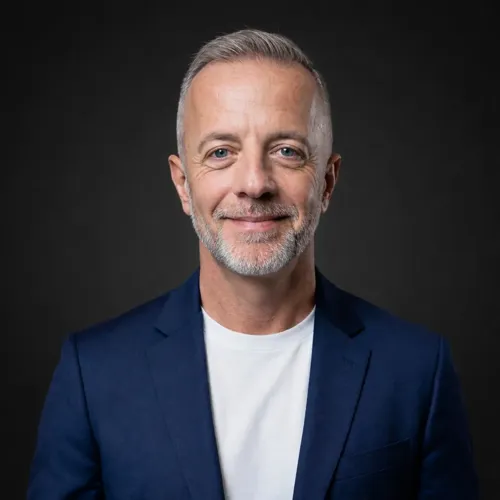
We spoke with Anais Aité, Head of Strategic Expansion at FIA, about the challenges of large-scale races, tackling sustainability, engaging local communities, and leaving long-term legacies beyond the track.
The Global Conversation Corner - Episode 9 is now live, packed with insights on making motorsports and events more sustainable, inclusive, and impactful worldwide.
Brought to you by ICCA, Event Point and SHAKE IT.
Cleaned Interview Transcript: FIA Representative on Motorsport Challenges and Opportunities
Interviewer: Thank you for accepting our invitation to this talk. I'd like to start by asking you—obviously, Formula 1 is a major global event. What are the main challenges you face nowadays?
Speaker (FIA Representative): That's a very good question. Obviously, we're going to talk about Formula 1, but it's not only about Formula 1—motorsports in general faces a lot of backlash, unfortunately, because in people's minds, we tend to think that it's an elite sport which costs a lot of money, that is not affordable and not accessible for everyone. That's the first issue and concern that we're facing. And obviously, the second one is everything that has to do with environmental impact and sustainability. People living in the cities where we have tracks and Grand Prix and any other championships or races complain about the disruption that this event brings—for example, street closures, traffic. It's also a lot of spending and taxes. Again, it's in people's minds. So, those are the main challenges, this perception that sometimes we face with motorsport.
Interviewer: Okay, I understand. But what are the strategies to deal with that?
Speaker: There are different strategies, obviously, and it really differs from one championship to another. The main thing with Formula 1 is that you need to make sure that you work with the local authorities, you work with the community, and you have long-term planning. People who will be affected by this championship need to feel part of the story. You need to involve them in everything that you do, in your questions, in discussions. They really need to understand the added value of the event you're bringing. And then what you should be doing as well is to really leave a legacy behind your event—not just dropping an event like this where it affects people and they don't understand the added value or see the benefits long-term.
Interviewer: And do you feel that people are available to give their opinion and, when they are listened to, their perception changes?
Speaker: Yeah, and I think that's a general rule. Obviously, when you take the time to listen to people and they feel like their opinion is valued, it changes a lot. It takes a lot of people to do that work because, when you're launching a big, large-scale event, it's not just you doing something—there are a lot of stakeholders and partners involved. You need to get all of these people in the room and make sure everyone has a say and feels heard. That's the most important thing.
Interviewer: What are you looking for when you choose a destination for one of the races? What do you expect?
Speaker: Just one clarification: I represent the FIA, which is the governing body for motorsport, not really Formula 1. So we're not directly involved in where we choose, but obviously we have a say. What is important—there are a lot of things: visibility, financials, logistics. Does that make sense? Would it be easy to implement a track, a race? Do you have all the facilities there? Do you think everyone will be involved in your project? Will you have enough support? It's also very important to understand whether you'll have backlash or detractors in the city, but most importantly is the infrastructure. Do you have the available existing infrastructure already in place?
Interviewer: You talked about sustainability. Can you give us a few examples of how you can change things and make these kinds of events more sustainable?
Speaker: There are a lot of things being done in terms of sustainability in motorsport. First of all, we have a lot of electric, sustainable championships—like Formula E, for example. As of next year, Formula 1 regulations will change, and you'll have more hybrid engines in Formula 1. So there are already a lot of things being done in terms of sustainability when it comes to the sport itself. When we talk about sustainability around the event, promoters and cities work with companies to encourage sustainable transport—from the hotel to the track, shuttles in the circuit as well. We're not only talking about sustainable mobility but a lot of sustainable actions in the paddock with recycled workshops or materials and things like this. We're really trying to improve and work on sustainability.
Interviewer: You also talked about legacy. In what ways is it possible to leave a positive legacy on the destinations that receive this kind of competition?
Speaker: The first one is visibility—so many people would be able to locate a city on the map after there's a Formula 1 or any other championship. When I think about Le Mans, for example, a very small city in France that hosts the 24 Hours of Le Mans—if it wasn't that, I'm not sure that many people would know where Le Mans is or what it even is in France. An event like Le Mans brings and attracts around 400,000 spectators, which is 10 times more than the city population, which is huge. What we don't know that much about in motorsport is that at the FIA, we tend to call it a laboratory for mobility and innovation because all the innovations developed in motorsports—for example, in Le Mans 100 years ago or even now in Formula E—everything to do with hydrogen, efficiency, all these added values that are used in your daily life in the car you drive every day were tested first in motorsports. That's also a legacy: using your city or destination as an innovation hub. Then obviously the infrastructure you build can be used for other events or championships, and you also build capacity. When you bring a track or Grand Prix to a city, you train people not really used to this kind of championship—hotels, entertainment, sponsors, everyone involved. They learn from these experiences, and it's all about building capacities: financial and long-term legacy like cultural legacy.
Interviewer: Is it easy to activate those local stakeholders like schools or universities, companies that work in mobility—is it easy to activate this kind of network?
Speaker: Nothing is very easy, but again it has to do with perception and community perception—the narrative is very important, sometimes even more than the event itself. If the community understands the level of engagement and the sense that you're trying to bring, then obviously it's easier. That's something we do a lot at the FIA. We're the governing body for motorsport but not only—we work to act as a global voice for safe and sustainable mobility around the world. We work a lot on road safety and sustainable mobility, safety of kids around school zones, for example. We connect these kinds of things. I'm thinking of a very fresh example we just had here in São Paulo at the F1 GP that happened last week, where we launched what we call a Star Rating for Schools project in Brazil. We invited schools and kids to the paddock; they met with Bottas, and Bottas acknowledged the importance of safe roads for kids to go to school. This is how we connect both hats. As long as people understand the needs, it's easy—but of course, it's not easy from the beginning.
Interviewer: We're talking obviously about sports events. Do you think there's a connection or link that we can establish with business events? Sport events can drive and help attract business events for a destination that has a motorsport competition, for instance.
Speaker: Yes. Motorsport brings a lot of visibility, and I think now more than ever it's becoming a little bit more popular than it used to be for many reasons. Young people are more attracted to Formula 1 races right now. It gives a lot of visibility, and there are a lot of partners interested in this business model who want to get to know more. That's also something with the guest experience in the paddock area, where you have stakeholders and business partners involved—they come, they're invited, and you have business meetings. Motorsport really gives visibility to a destination and makes it a serious global sports destination.
Interviewer: How do you think it's possible to improve the experience of spectators? Obviously, there are people who attend events physically, but many others see this on television or their mobile phones. How is it possible to improve the experience for these kinds of events?
Speaker: There are a lot of things being done, and we need to follow how society evolves. Now we live in a digital era—everyone is on social networks, we have all these social platforms, live streams. I'm sure there are a lot of things that can be done. At this stage, what's in place is already efficient enough, but we're always keen on improvements. What we're trying to do is improve the experience on site. The thing with motorsport is that the perception and experience isn't exactly the same as with another sport. For example, with football, you sit in the stadium and have the whole competition in front of you. With motorsport, you're sitting in one space, a car passes by very fast, and you need to keep an eye on the screen as well. But the vibe and atmosphere at a race weekend is something you cannot feel on TV. Now they're improving a lot, bringing activities to fans, and it's all about making people feel part of the story.
Interviewer: We talk about sustainability, legacy—I think technology plays a huge role. How do you see, for instance, AI impacting the way you organize events or engage with people? Is this an interesting challenge from your perspective?
Speaker: That's a good point. Here I need to speak on behalf of the FIA—our role is being the governing body for motorsport. We organize our own events, so of course AI is being developed a lot and can be useful for events on our side at the FIA level. I think AI could be useful for engineering and the sport itself. When it comes to events, at this stage it's a little bit different. You can have added values and extra activities around AI, and AI is very important in terms of content for us and our member clubs. But I'm not sure I have enough to say about the role of AI in motorsport events itself.
Interviewer: And how about data? Nowadays we have access to a lot of information. How can we use this data better to make events and business more interesting in the future?
Speaker: What is very interesting with data is how you use it and what you do with the information it provides—not only reading, but analyzing and finding solutions based on this data. On our side, we use this data to improve as much as possible, going back to sustainability for sustainable transport around motorsport events. We try to use all this data, work with other companies, local authorities, and the city to better improve and cause less disruption in terms of traffic and congestion. From a business perspective, the target audience for motorsport and F1 in general has completely shifted over the last years. The Netflix show has had a role in that, but we noticed the audience is younger and tends to be more female than in the past. Based on that, there are a lot of things to be done from a business perspective to use this data.
Interviewer: And the importance of being on a congress like this one—what do you expect to take from this experience here in Porto?
Speaker: First of all, I'm very happy to be here at ECA in Portugal—it's my first time in Porto, in Portugal in general. I'm really enjoying this event. What is very important and what we value with ECA is the network—the network that ECA has and provides is impressive, and I'm not sure any other organization can provide such a huge, strong, and wide network. That's the main reason we value our participation here. Tourism is such a big topic and a big world, but such a small world at the same time. From my perspective at the FIA, we don't tend to see sport as tourism. When you think about sport, you don't think about tourism, and vice versa. But it's crazy how these two are connected and how they bring a lot to each other. At the FIA, we work a lot with UN Tourism, and we have these two hats: tourism when it comes to mobility services, but also sport tourism that we'd like to increase and give more visibility. This is the perfect opportunity to be here at ECA, to raise awareness about the importance of sport as a tourism tool, but also to add to their network. ECA already has a strong network, but at the FIA we have 249 member clubs representing 140 countries. It's very important for us to be here, make the connections, and see the opportunities and synergies.
Interviewer: Okay, Anais, thank you very much for your time.
Speaker: Thank you. My pleasure.